Case Study
Case Study
Public Sector Intelligence Ecosystem
Public sector intelligence platform governing decisions across services, policy, and compliance.
Year:
2026
Industry:
e-commerce
Team:
45 people
Approach
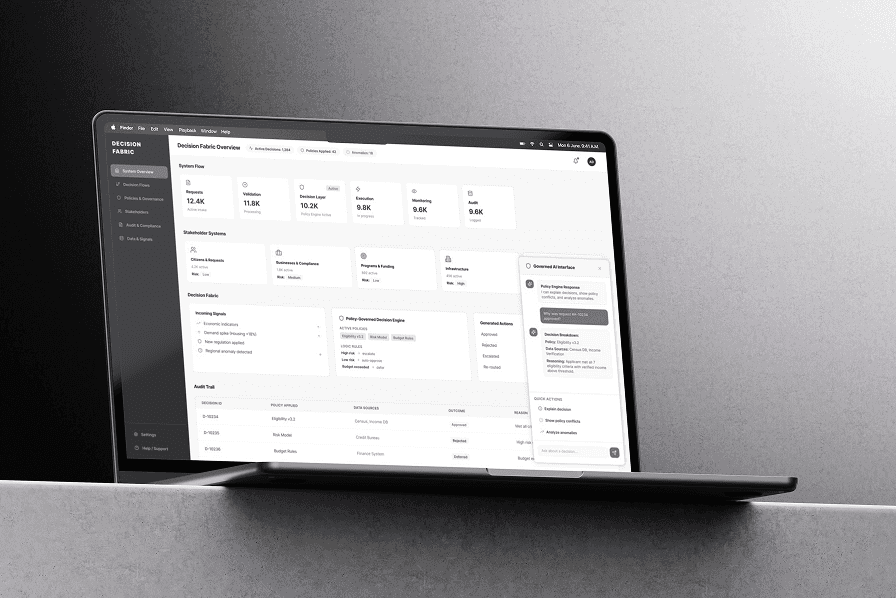
We assessed how service requests, policy data, and operational workflows drive decision-making across public sector processes. This exposed gaps between eligibility validation, decision execution, and compliance tracking—impacting efficiency, transparency, and service delivery speed. Journey analysis across stakeholders revealed inconsistencies in request handling, program execution, and feedback loops. These insights led to a Controlled Autonomy Architecture, aligning real-time signals, governed decisions, and adaptive execution.
We assessed how service requests, policy data, and operational workflows drive decision-making across public sector processes. This exposed gaps between eligibility validation, decision execution, and compliance tracking—impacting efficiency, transparency, and service delivery speed. Journey analysis across stakeholders revealed inconsistencies in request handling, program execution, and feedback loops. These insights led to a Controlled Autonomy Architecture, aligning real-time signals, governed decisions, and adaptive execution.
We assessed how service requests, policy data, and operational workflows drive decision-making across public sector processes. This exposed gaps between eligibility validation, decision execution, and compliance tracking—impacting efficiency, transparency, and service delivery speed. Journey analysis across stakeholders revealed inconsistencies in request handling, program execution, and feedback loops. These insights led to a Controlled Autonomy Architecture, aligning real-time signals, governed decisions, and adaptive execution.
Architecture
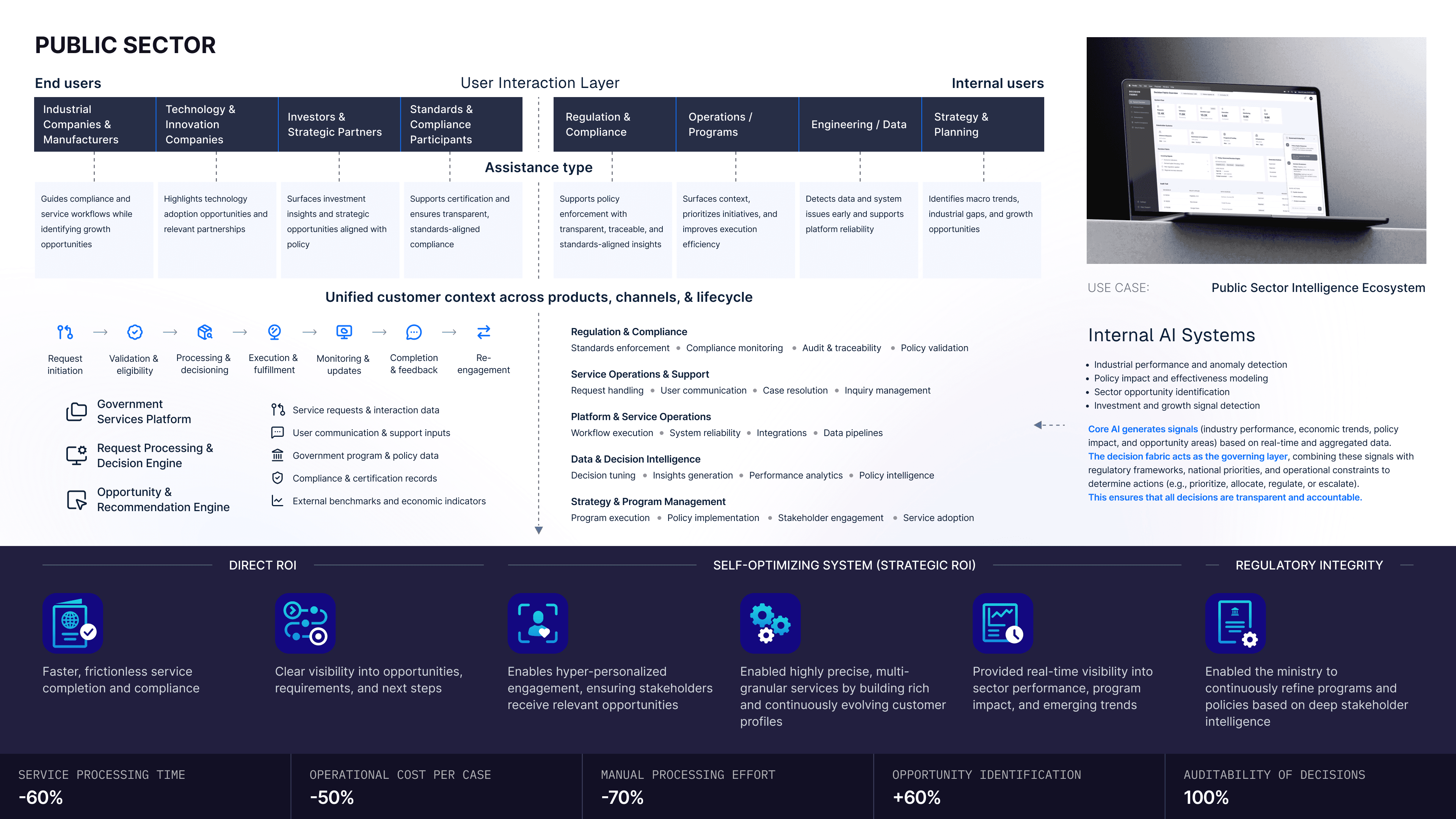
The system is structured as a layered model integrating signal intelligence, decision governance, and execution orchestration. A unified context layer aggregates service interactions, policy data, compliance records, and external indicators. Core AI generates insights on performance, risks, and opportunities, while the decision layer applies regulatory rules, priorities, and constraints. Execution agents dynamically manage workflows, recommendations, and service delivery processes.
The system is structured as a layered model integrating signal intelligence, decision governance, and execution orchestration. A unified context layer aggregates service interactions, policy data, compliance records, and external indicators. Core AI generates insights on performance, risks, and opportunities, while the decision layer applies regulatory rules, priorities, and constraints. Execution agents dynamically manage workflows, recommendations, and service delivery processes.
The system is structured as a layered model integrating signal intelligence, decision governance, and execution orchestration. A unified context layer aggregates service interactions, policy data, compliance records, and external indicators. Core AI generates insights on performance, risks, and opportunities, while the decision layer applies regulatory rules, priorities, and constraints. Execution agents dynamically manage workflows, recommendations, and service delivery processes.
Outcome
The platform enables continuous optimization of public service delivery and policy execution. It reduces processing time, operational costs, and manual effort while improving opportunity identification and stakeholder engagement. At the same time, it ensures fully transparent, auditable, and compliant decisions across all services and programs.
The platform enables continuous optimization of public service delivery and policy execution. It reduces processing time, operational costs, and manual effort while improving opportunity identification and stakeholder engagement. At the same time, it ensures fully transparent, auditable, and compliant decisions across all services and programs.
The platform enables continuous optimization of public service delivery and policy execution. It reduces processing time, operational costs, and manual effort while improving opportunity identification and stakeholder engagement. At the same time, it ensures fully transparent, auditable, and compliant decisions across all services and programs.
Service Processing Time
-60%
Operational Cost per Case
-50%
Manual Processing Effort
-70%
Opportunity Identification
+60%
Auditability of decisions
100%
DECISION TRACEABILITY
100%
More projects





Ready to start?
Get in touch
Whether you have questions or just want to explore options, I'm here.

Ready to start?
Get in touch
Whether you have questions or just want to explore options, I'm here.
Ready to start?
Get in touch
Whether you have questions or just want to explore options, I'm here.