A governance-driven framework for self-adjusting systems through controlled, feedback-driven decision-making
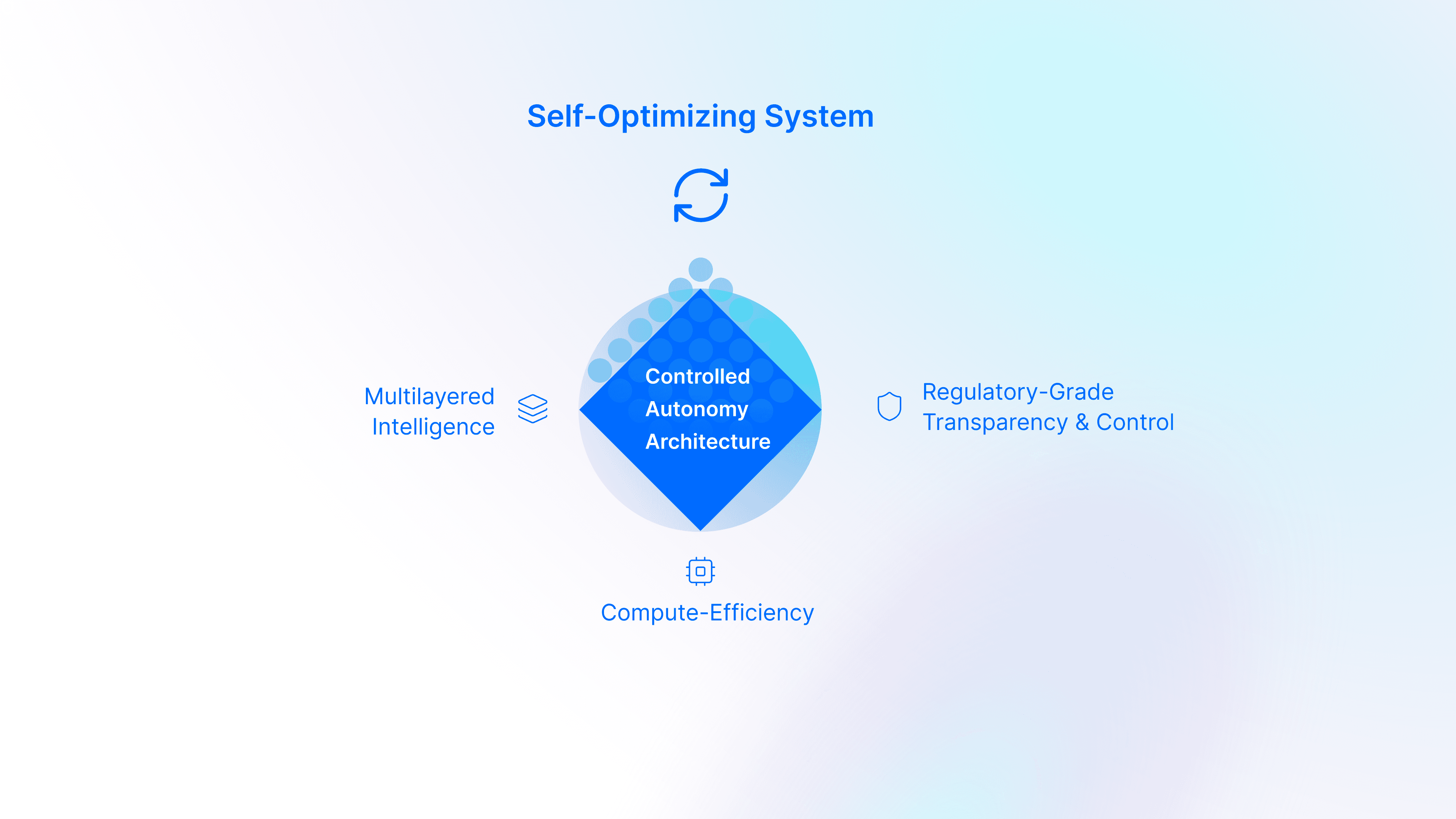
Controlled Autonomy Architecture. the real power of agents
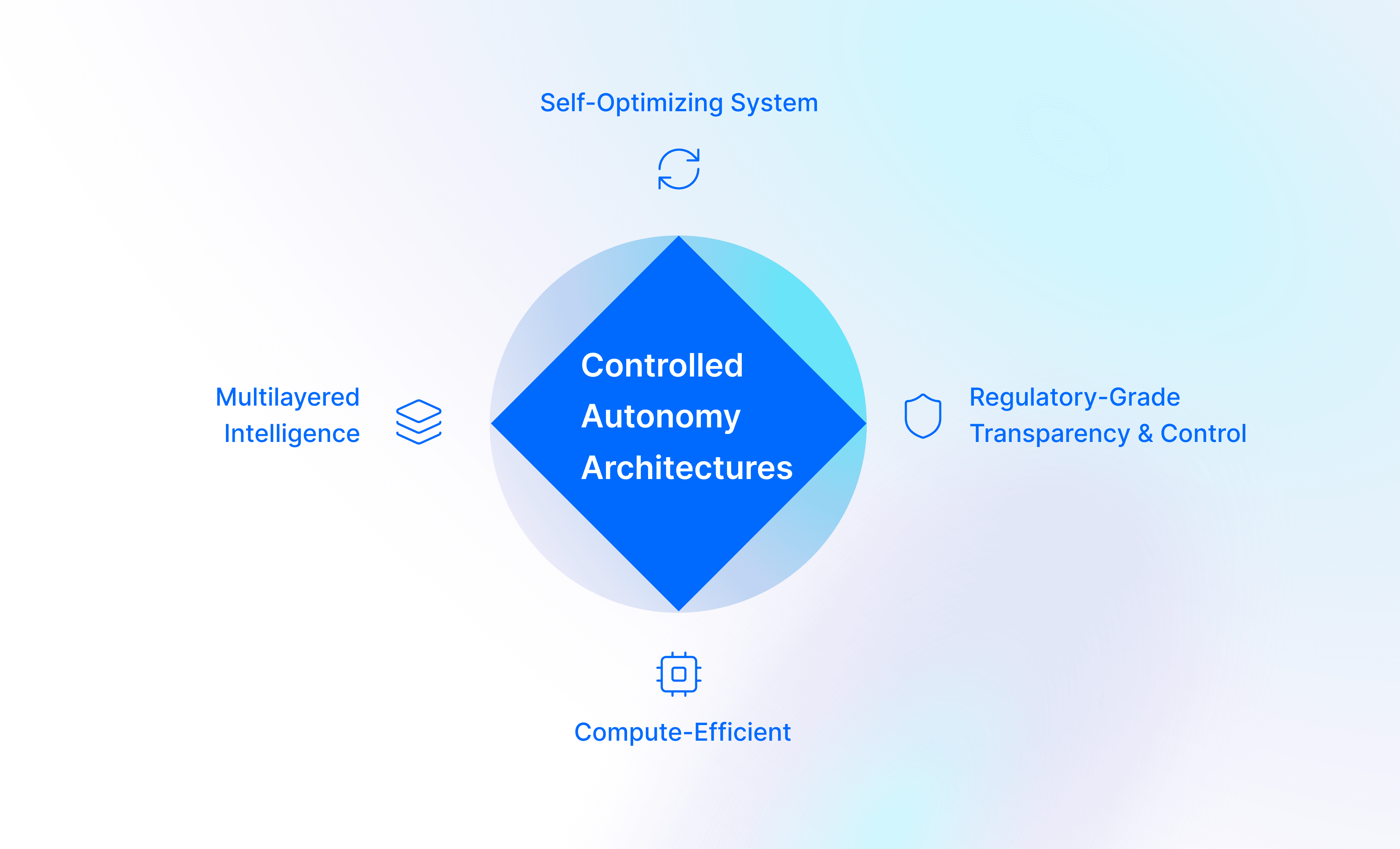
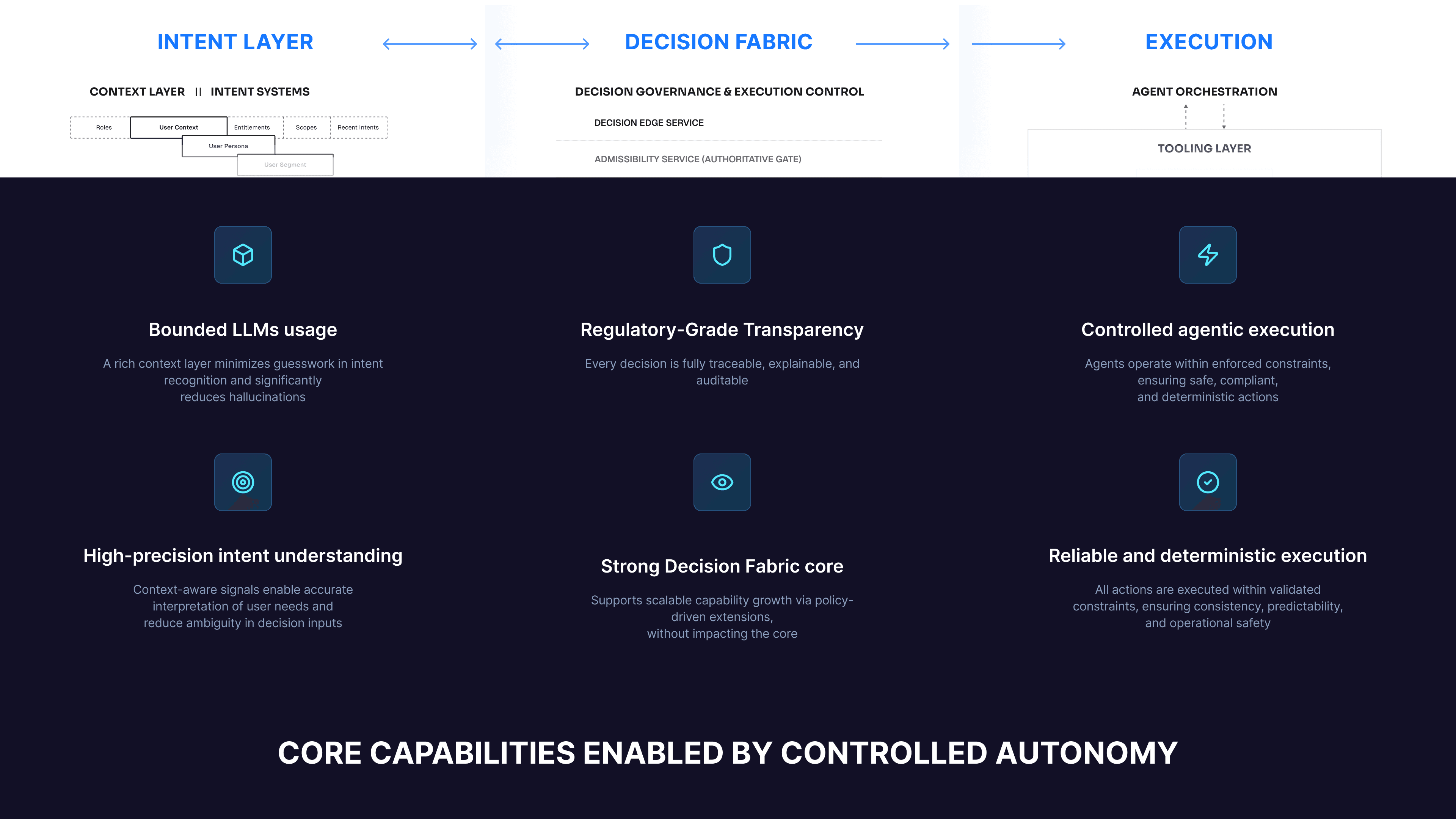
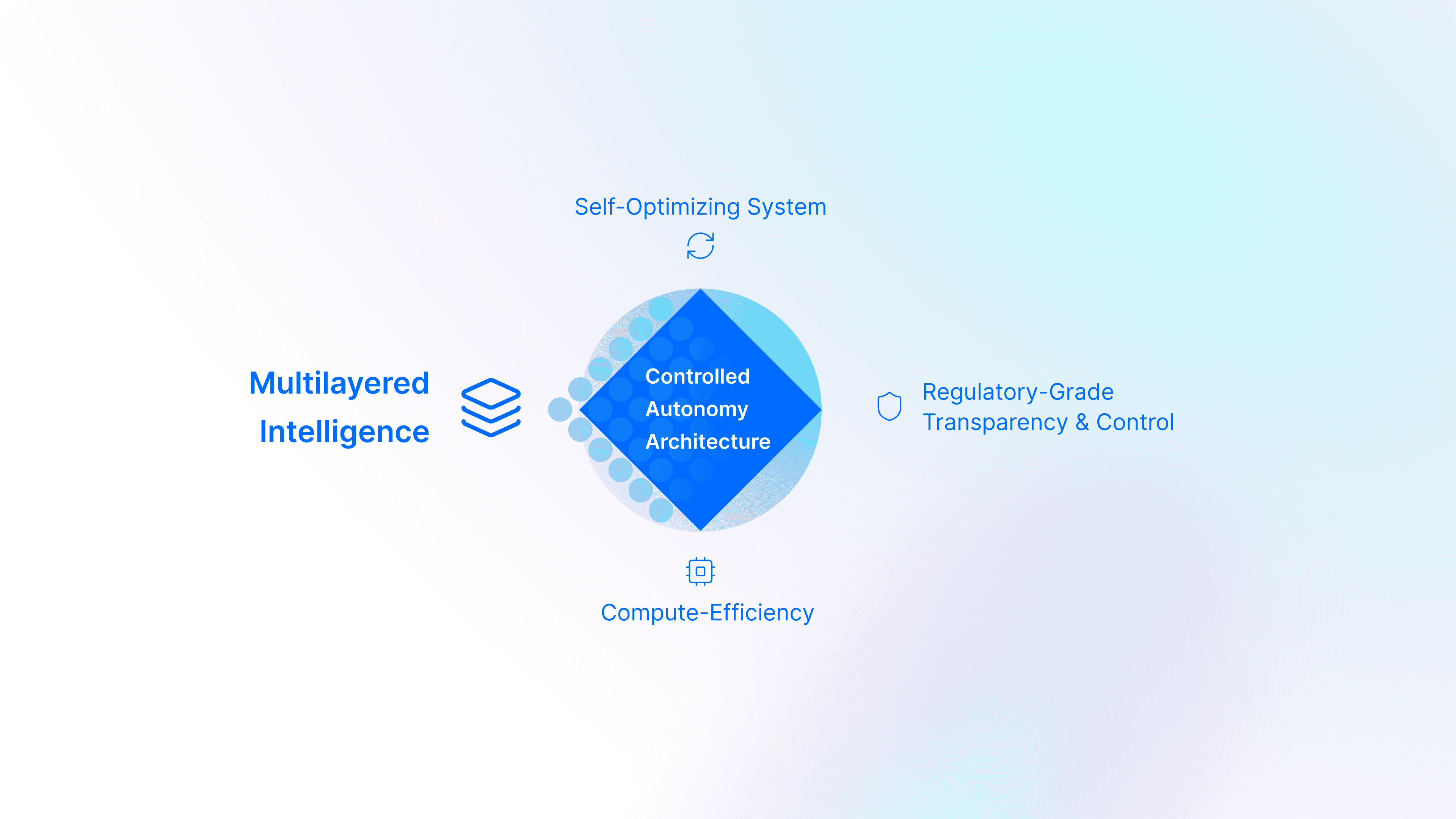
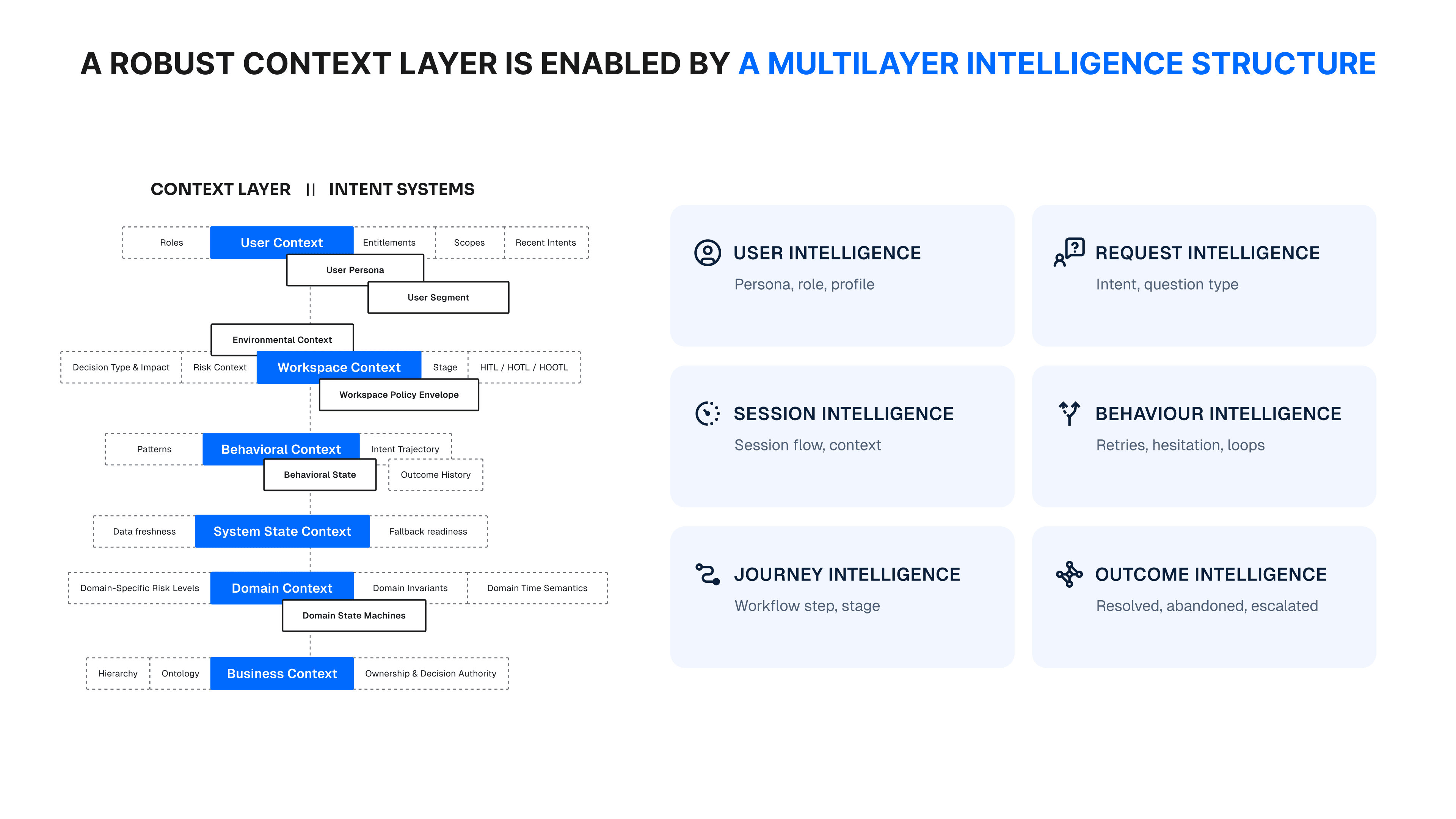
Framework defines how a multilayer intelligence structure builds a robust context layer for decision-making.
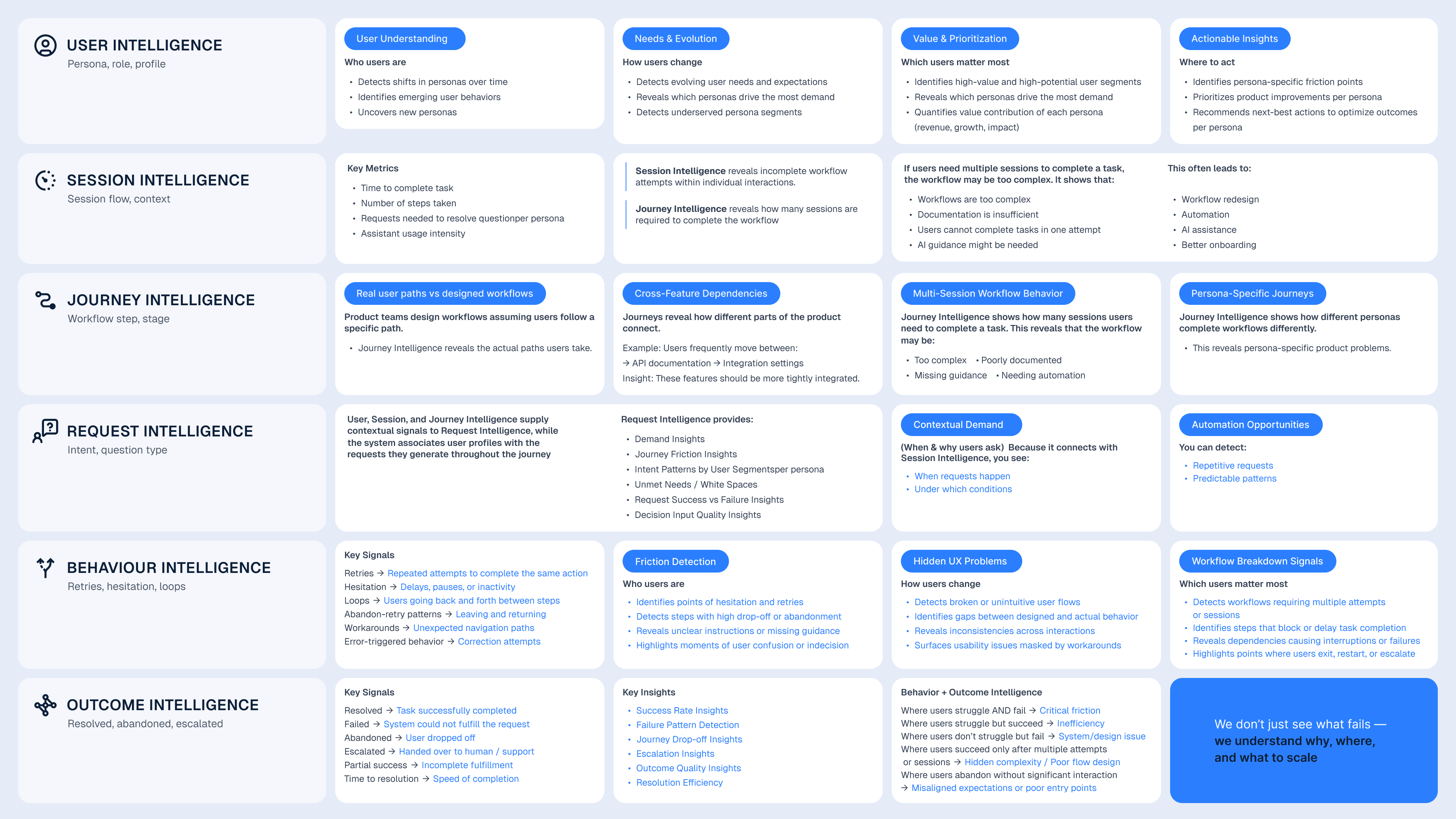
It integrates user, session, journey, request, behavior, and outcome signals to create a continuously evolving understanding of intent, interaction, and results.
By connecting these intelligence layers, the system moves beyond isolated insights—enabling context-aware, governed decisions that adapt in real time and improve through feedback loops.
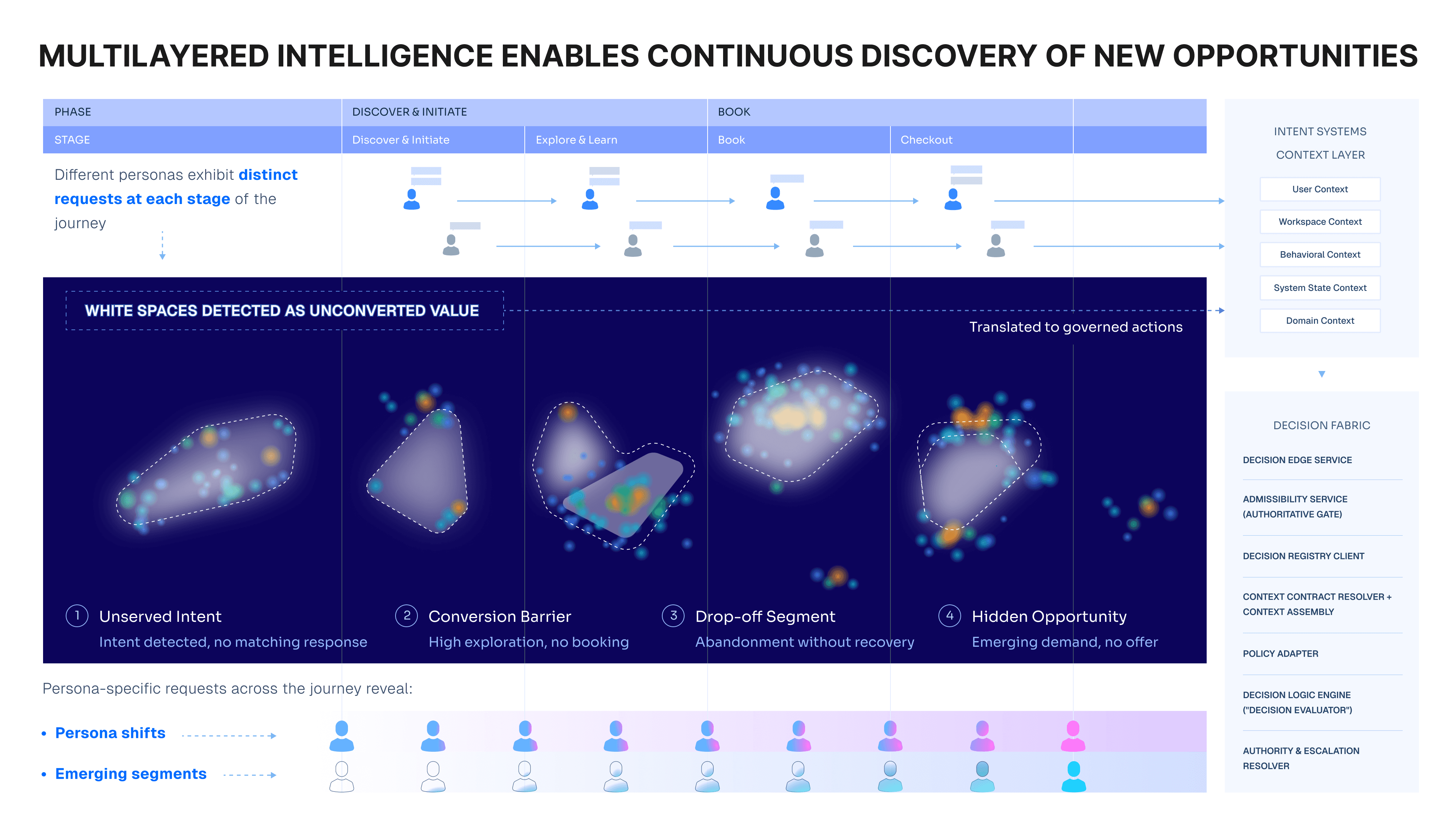
Slide illustrates how multilayered intelligence continuously uncovers hidden value across the user journey. At each stage—discovery, exploration, booking, and checkout—different personas exhibit distinct requests, behaviors, and intent patterns. By capturing signals across user context, behavior, system state, and domain knowledge, the platform builds a rich, dynamic understanding of what users are trying to achieve in real time.
Within this journey, the system identifies “white spaces” as unconverted value—areas where user intent is present but not successfully fulfilled. These manifest as unmet needs (unserved intent), friction points (conversion barriers), abandonment (drop-off segments), or emerging demand (hidden opportunities). Instead of treating these as isolated issues, the platform systematically detects and categorizes them as signals of missed outcomes.
These insights are then translated into governed actions through the decision fabric, ensuring consistent, policy-aligned execution. By connecting intent systems with decision layers, the platform enables continuous discovery, adaptation, and optimization. Over time, this creates a self-improving system that not only reacts to user behavior but proactively evolves—turning fragmented signals into measurable business impact.
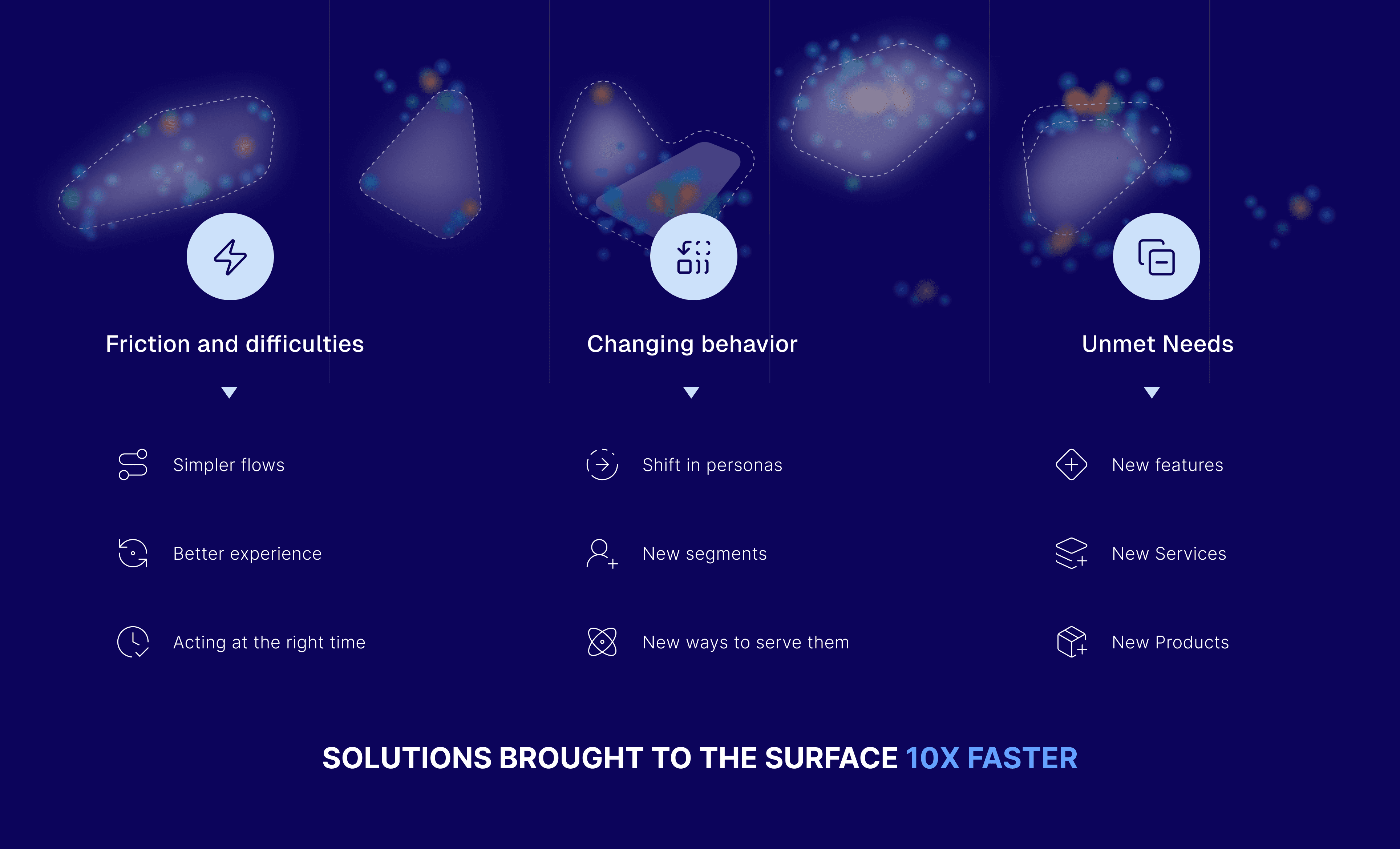
The system transforms raw behavioral signals into meaningful, actionable insights by identifying where user intent, behavior, and outcomes are not fully aligned. These signals fall into three core domains: friction and difficulties, changing behavior, and unmet needs—each representing a different type of opportunity emerging across the user journey.
Friction and difficulties reveal where users encounter obstacles, delays, or confusion, enabling improvements such as simpler flows, better experiences, and timely interventions. Changing behavior captures how users evolve over time, uncovering shifts in personas, emerging segments, and new interaction patterns. Unmet needs expose gaps between user intent and available solutions, driving the creation of new features, services, and products.
Together, these signals form a continuous pipeline from detection to action. They are translated into structured, governed responses that improve decisions and outcomes. This enables organizations to surface and act on opportunities significantly faster, creating a self-optimizing system that continuously adapts and evolves.


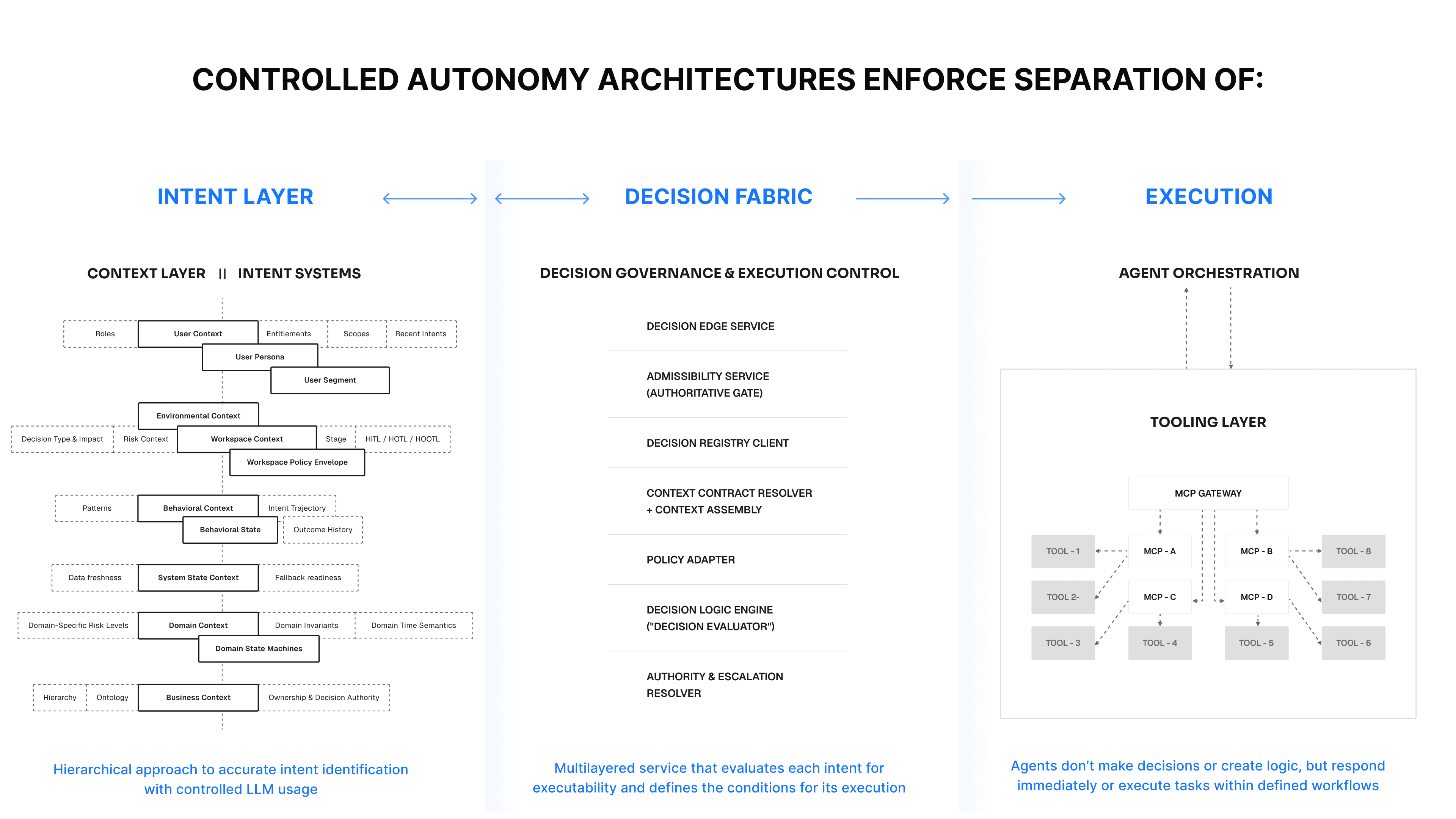
A structured pipeline transforms user intent into governed, real-world action, ensuring that every decision is validated, constrained, and executed reliably.
The process begins by converting raw inputs into structured intent through classification, context assembly, and objective definition, creating a complete understanding of the goal. This then flows into a centralized decision layer where business logic, access control, policy validation, and execution boundaries are applied. Decisions are rigorously evaluated for compliance, feasibility, and risk before any action is allowed.
Based on this evaluation, the system determines how to proceed—execute, hold, redirect, or reject—ensuring responses are context-aware and controlled. Approved actions are carried out through coordinated execution components that enforce constraints, validate outcomes, and monitor performance. A continuous feedback and revalidation loop ensures the system learns from outcomes, updates decision logic, and adapts over time, while governance capabilities such as auditability, security, and compliance are embedded throughout.
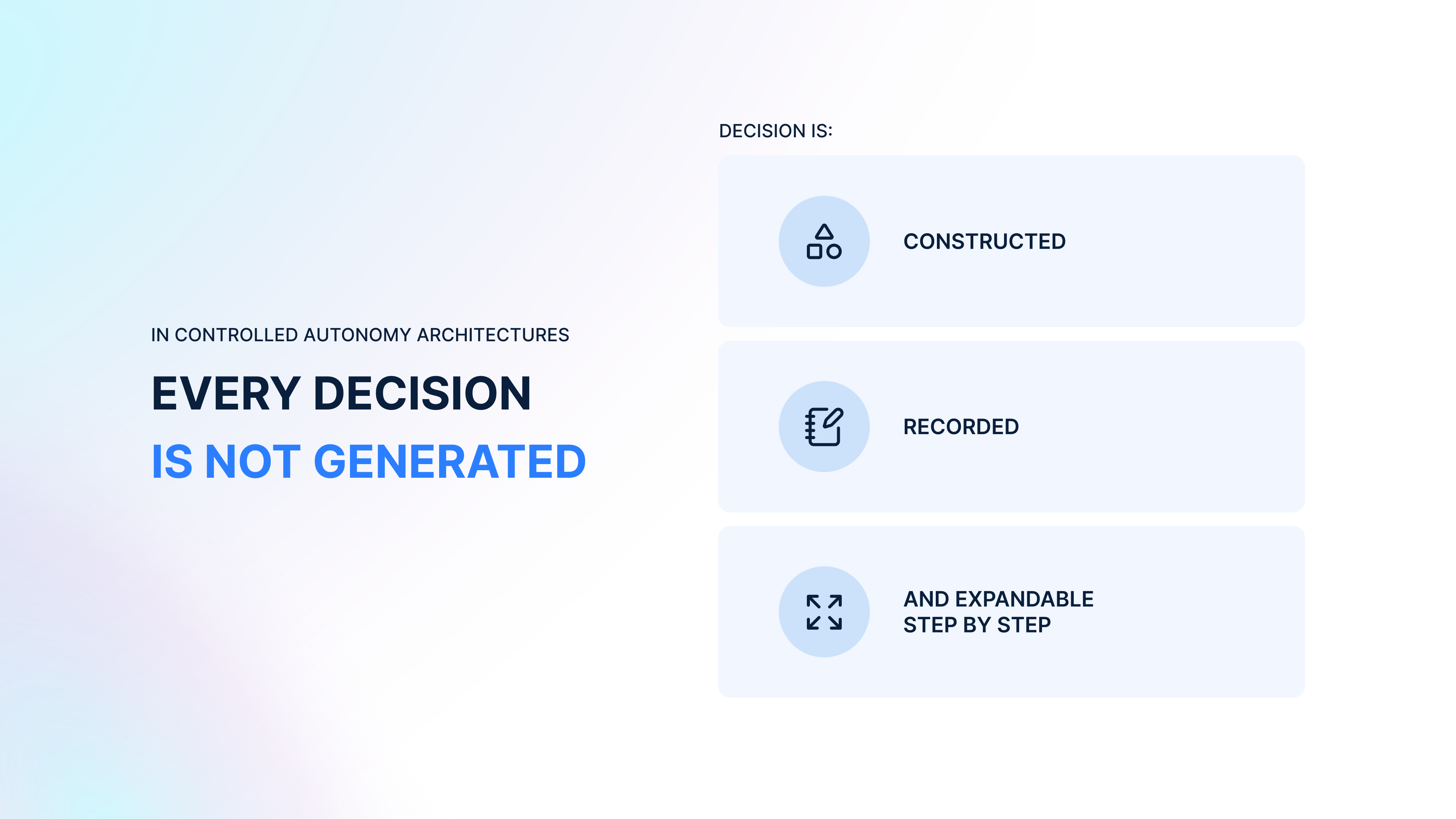
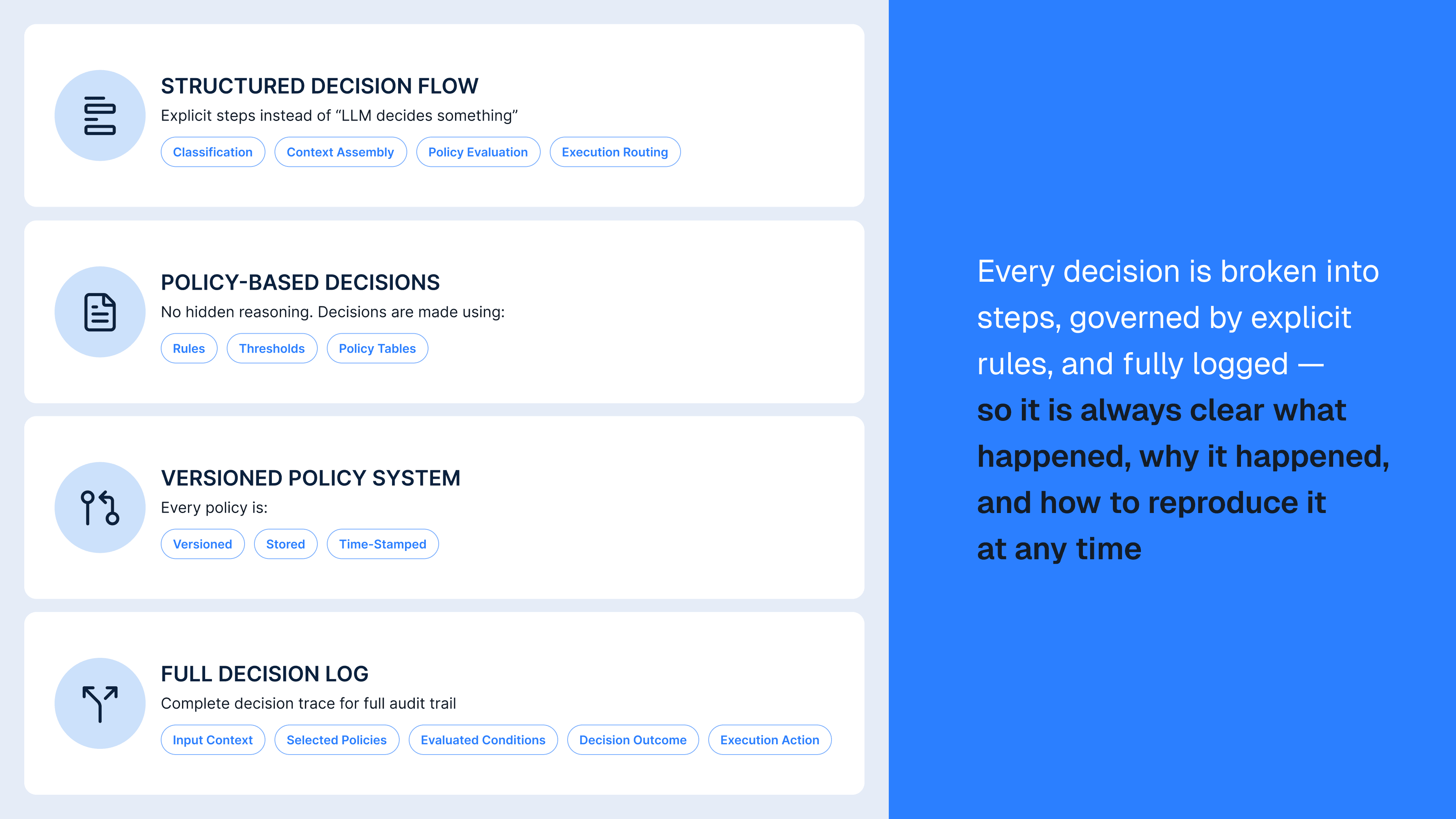
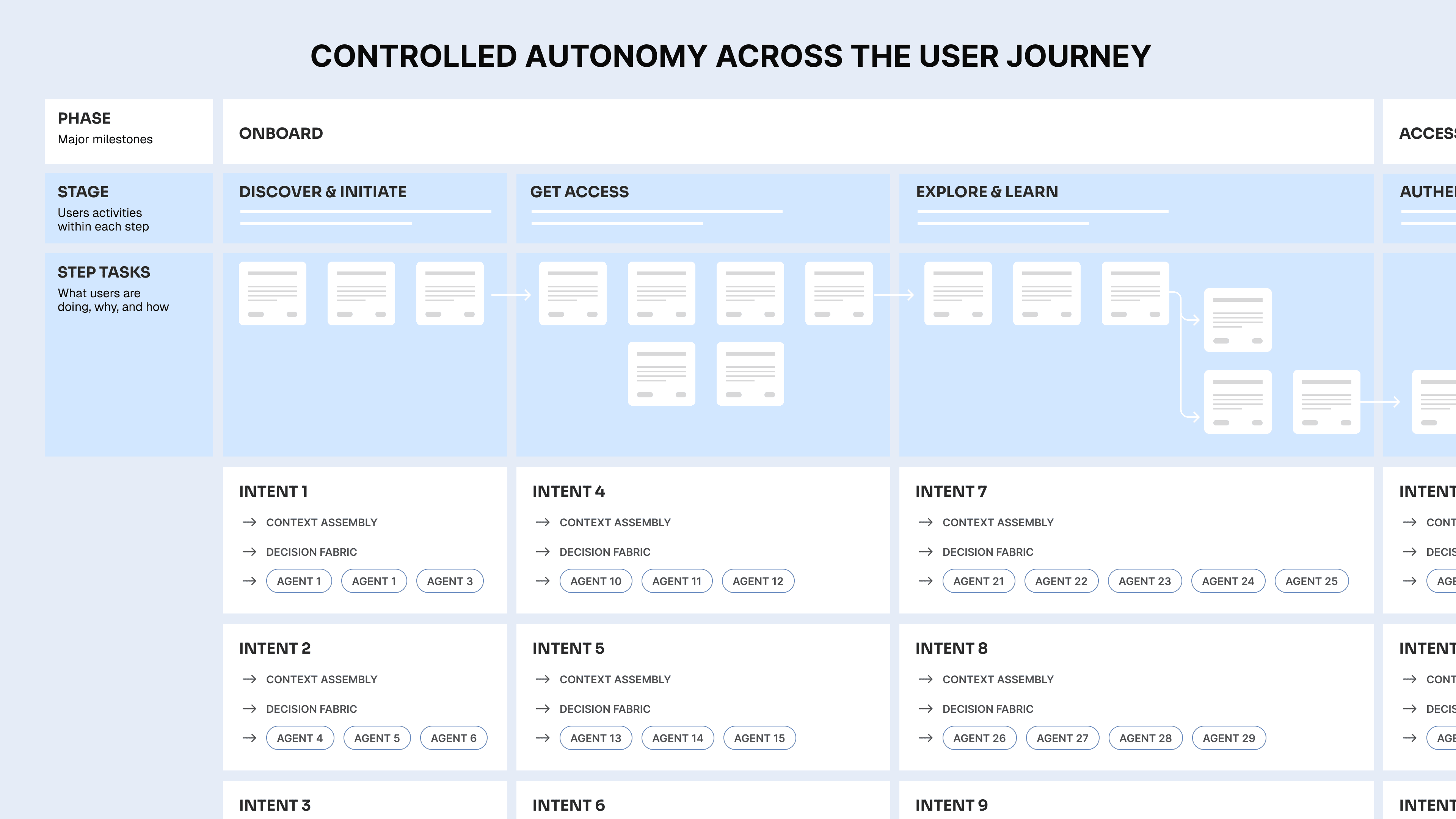

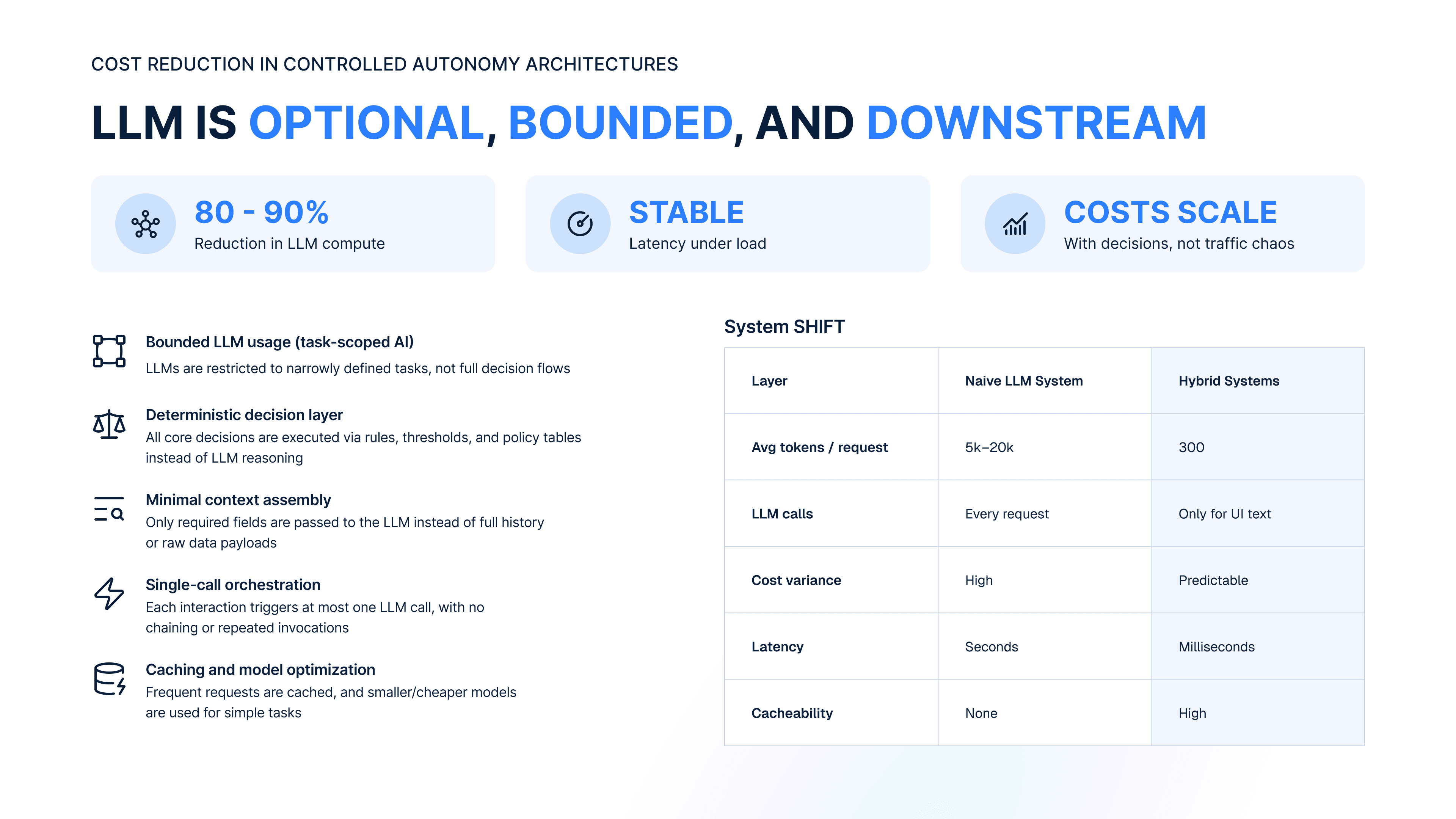
The system reduces costs by repositioning LLMs as optional, bounded, and downstream components rather than central decision-makers. Instead of relying on LLMs for full reasoning flows, their usage is limited to narrowly defined tasks, while core decisions are handled by deterministic logic such as rules, thresholds, and policy layers. This approach significantly reduces computational overhead, stabilizes performance under load, and ensures that costs scale with actual decisions rather than uncontrolled request volume.
Efficiency is achieved through strict control of how and when LLMs are used. Only minimal, relevant context is passed when needed, avoiding large payloads and full history processing. Each interaction triggers at most a single LLM call, eliminating chaining and repeated invocations. Additional optimization techniques such as caching frequent requests and using smaller models for simpler tasks further reduce cost while maintaining performance.
This architectural shift results in a more predictable and scalable system compared to naive LLM-centric approaches. Token usage drops dramatically, latency is reduced from seconds to milliseconds, and cost variability becomes controlled and predictable. By decoupling decision logic from generative processing, the system achieves high cacheability, faster response times, and a stable operational profile suitable for production-scale environments.